Learning How to improve distributon for online courses is the difference between having a great course that nobody finds and building a profitable education business that grows every month. Many creators spend weeks recording lessons, designing slides, and perfecting their curriculum, only to launch to silence because they never planned how students would discover, evaluate, and enroll in the course.
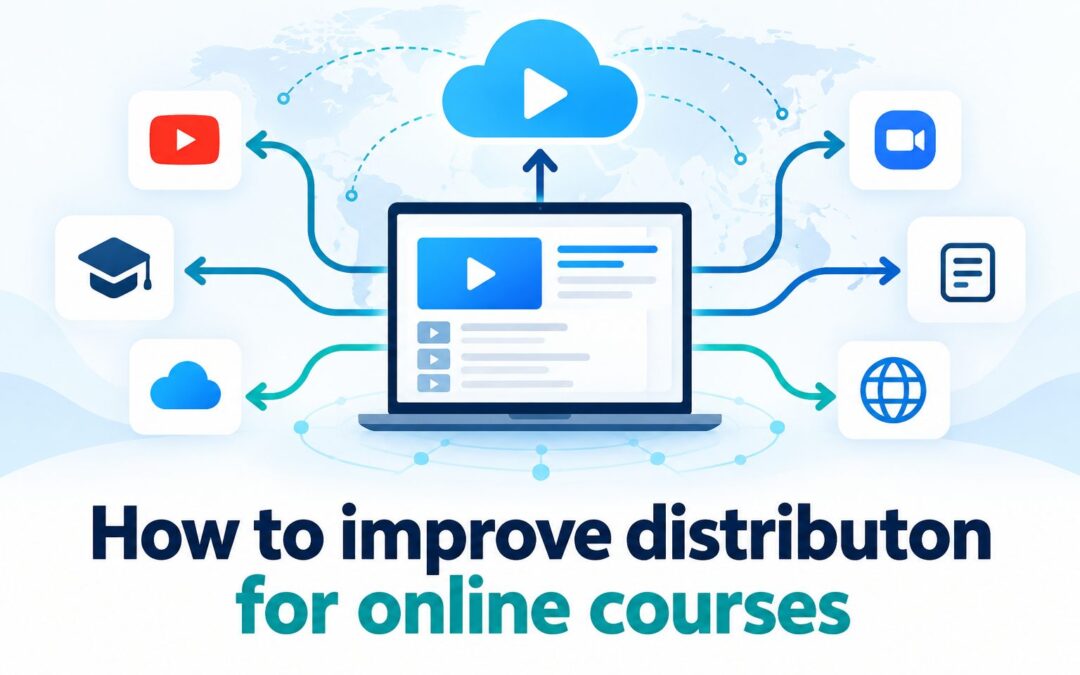
Distribution simply means getting your course in front of the right learners at the right time through the right channels. It includes search, social media, email, partnerships, marketplaces, affiliates, communities, and paid promotion working together. When your distribution system is strong, every piece of content you create compounds and brings a steady flow of new students without constant hustle.
In this guide, you will learn practical and proven ways to expand your reach, increase enrollments, and build long-term demand for your programs. We will cover why distribution is challenging, which channels work best, best practices for growth, common mistakes to avoid, and answers to frequent questions from course creators at all levels.
Whether you sell your first course or manage a full catalog, these strategies will help you move beyond relying on one platform. You will discover how to combine organic, partnership, and paid methods into a repeatable engine that improves visibility, trust, and conversions over time.
Most online courses do not fail because of poor content, they fail because of poor visibility. Thousands of excellent courses sit unnoticed while average courses with better marketing generate consistent revenue and reviews.
Strong distribution creates momentum that improves everything else. More students mean more feedback, more testimonials, more case studies, and higher rankings on marketplaces and search engines.
The best creators treat distribution as a product in itself, not an afterthought. They test messages, channels, and offers weekly, then double down on what drives qualified traffic and enrollments.
You do not need to be everywhere at once to succeed. A focused mix of two to three core channels, supported by email and social proof, is often enough to grow steadily.
The goal is to build owned and earned traffic that you control, so algorithm changes and ad costs do not threaten your entire business overnight.
Why Is Distribution Hard for Online Courses?
1. Oversaturated Market Makes Visibility Difficult
The online education market is extremely crowded, with millions of courses covering almost every topic imaginable. Learners face decision fatigue and often choose courses with more reviews, better branding, or stronger recommendations. To stand out, you must clarify your specific outcome, audience, and transformation in simple language. Niching down, showcasing real student results, and publishing helpful free content will make your course easier to find and easier to trust.
2. Learners Need High Trust Before Buying
An online course is an investment of money, time, and effort, so students are cautious before enrolling. They look for instructor credibility, detailed curriculum, previews, guarantees, and authentic reviews. If your sales page and content do not quickly build confidence, visitors will leave without buying. Consistently sharing teaching clips, student wins, behind-the-scenes insights, and honest answers to objections helps reduce perceived risk and increase conversions.
3. Dependence on Single Platform Limits Reach
Many creators rely entirely on one marketplace or social platform for all their sales. While that can work initially, it leaves you vulnerable to algorithm shifts, fee increases, and rising competition. If that single source slows down, your revenue drops immediately. A resilient strategy spreads enrollment across search, email, social, affiliates, and partnerships, so no single change can break your business and you can reach learners wherever they spend time.
4. Weak Positioning and Unclear Outcomes
Vague promises like learn marketing or master design do not motivate action because they lack a concrete result and timeline. Learners pay for outcomes such as getting freelance clients in 90 days, passing a certification exam, or automating business workflows. When your title, subtitle, and introduction clearly state who it is for, what problem it solves, and what success looks like, your course becomes far more memorable, shareable, and searchable across all distribution channels.
5. Inconsistent Content and Promotion Efforts
Distribution requires consistent visibility, yet many creators promote only during launch week and then go silent. Without regular helpful content, your audience forgets you and search engines have little to rank. A sustainable rhythm of weekly videos, posts, newsletters, or podcasts keeps you top of mind. Each piece can address a real learner question, demonstrate your teaching style, and naturally point interested viewers toward your full paid course.
6. Poor Funnel From Discovery to Enrollment
Even with good traffic, enrollments suffer if the journey from discovery to purchase is confusing. Visitors may find a social post but not understand the next step, or they land on a cluttered sales page without clear proof. Effective distribution connects every touchpoint, from free tutorial to lead magnet to email sequence to checkout. Simple calls to action, free previews, webinars, and follow-up emails help curious browsers become confident buyers.
7. Lack of Social Proof and Student Stories
New courses without reviews face an uphill battle because buyers rely heavily on peer validation. Zero testimonials signals risk, even if the curriculum is excellent. To overcome this, offer beta access, collect detailed feedback, and document before-and-after transformations. Video testimonials, screenshot results, completion rates, and project showcases make your promises believable. As proof accumulates, affiliates are more willing to promote you and conversion rates improve across every channel.
Key Channels to Distribute Online Courses
1. Search engine optimization and blogging help learners find your course when they search for solutions, tutorials, and comparisons, creating compounding free traffic that grows for months and years with consistent helpful articles and guides.
2. Video platforms like video sharing sites and short-form apps let prospects experience your teaching style quickly, build trust faster, and discover you through search, suggested videos, and viral educational clips.
3. Email marketing and newsletters nurture interested subscribers with lessons, stories, and offers, delivering the highest conversion rates because you communicate directly without fighting algorithms for attention.
4. Partnerships, affiliates, and bundles expand your reach to established audiences through joint webinars, guest teaching, and revenue sharing, providing instant credibility and low-risk student acquisition.
5. Online communities, cohorts, and marketplaces place your course where motivated learners already gather, allowing discussions, challenges, and reviews to drive natural word-of-mouth and repeat enrollments.
Best Practices to Grow Course Reach
- Define a clear transformation: State exactly who the course helps, what problem it solves, and what measurable outcome students will achieve. A specific promise with a timeline is easier to market, easier to search for, and easier for happy students to recommend to others.
- Build an email list early: Offer a free mini-course, checklist, template, or workshop in exchange for email addresses. Send weekly valuable lessons and stories, then invite subscribers to join your paid program with clear deadlines, bonuses, and guarantees.
- Repurpose content strategically: Turn each course module into multiple posts, videos, reels, threads, and newsletter issues. One strong lesson can fuel a week of distribution across platforms, each piece linking back to a free preview or lead magnet.
- Leverage proof at every step: Collect testimonials, ratings, completion data, and project results from the start. Feature them on sales pages, in ads, in emails, and on social media to reduce doubt and help new visitors trust your teaching quickly.
- Create partnership flywheels: Collaborate with newsletter writers, podcast hosts, community leaders, and complementary creators. Offer affiliate commissions, bundle deals, or guest workshops so partners benefit from promoting your course to their engaged audiences.
- Optimize sales pages for conversion: Use a compelling headline, curriculum breakdown, instructor story, preview videos, FAQs, pricing options, and money-back guarantee. Test headlines, testimonials placement, and calls to action to steadily lift enrollment rates from existing traffic.
- Use smart paid amplification: Once organic content and email convert reliably, reinvest profits into targeted ads that promote free workshops or lead magnets rather than direct cold sales. Retarget visitors who watched previews or abandoned checkout to recover lost enrollments efficiently.
Common Mistakes That Limit Course Sales
1. Trying to Be on Every Platform
Spreading yourself across six social networks, three marketplaces, and paid ads at once leads to burnout and shallow results. Each channel requires different formats and consistency to work. It is far more effective to master one discovery channel and one conversion channel first, such as video plus email. Once those generate predictable enrollments, you can systematically expand to additional platforms without losing quality or momentum.
2. Selling Features Instead of Outcomes
Listing hours of video, number of lessons, and downloadable files does not excite buyers as much as clear life or career benefits. Learners care about getting promoted, launching a business, saving time, or gaining confidence. Translate every feature into a benefit and support it with student stories. When your messaging focuses on transformation, your course feels more valuable and your promotional content naturally attracts the right audience.
3. Ignoring Search and Evergreen Content
Relying only on social posts that disappear in 24 hours means you must constantly create to stay visible. Searchable tutorials, comparison guides, and how-to articles continue driving traffic for years after publication. By targeting questions your ideal students already search for, you capture high-intent learners exactly when they need help and guide them toward your structured paid solution.
4. Neglecting Email Follow Up Sequences
Most visitors will not buy on their first visit, yet many creators never follow up. Without an automated welcome and sales sequence, interested leads cool off and forget your offer. A simple five to seven email series that delivers value, addresses objections, shares proof, and presents a clear invitation can dramatically increase conversions from the same amount of traffic without extra ad spend.
5. Pricing Without Testing or Tiers
A single rigid price with no payment plan, tier, or limited-time bonus can suppress enrollments. Different learners have different budgets and commitment levels. Testing self-paced versus cohort options, adding a premium tier with coaching, and offering payment plans can expand your market. Clear value stacking, guarantees, and thoughtful discounts during launches help hesitant buyers take action with confidence.
6. Overlooking Affiliates and Partners
Trying to grow entirely alone is slow and expensive. Affiliates, alumni, employers, and industry communities can introduce your course to warm audiences far faster than cold ads. Creators often avoid partnerships because setup feels complex, but a simple commission structure, swipe copy, and tracking link is enough to start. Happy students and aligned creators are often eager to share resources that genuinely help their followers.
7. Failing to Update and Re-Launch Regularly
A course left untouched for years looks outdated and loses ranking, relevance, and referral energy. Regular updates, new bonus lessons, fresh testimonials, and seasonal re-launches give you reasons to email your list, pitch partners, and publish new content. Each refresh improves student satisfaction and creates a natural promotional moment that brings past interested leads back to your checkout page.
Improving distribution for your online courses is about clarity, consistency, and connection. When you define a compelling outcome, show up regularly where learners search, and nurture trust through email and proof, enrollments become far more predictable.
Start by strengthening one discovery channel and one conversion path, then layer in partnerships and smart paid promotion as results grow. Small weekly improvements in messaging and visibility compound quickly.
Focus on serving learners before selling to them, keep updating your course, and make it easy for happy students to spread the word. With that foundation, your excellent content will finally reach the audience it deserves.
FAQs About Online Course Distribution
How Long Does It Take to Grow Course Distribution?
Most creators see early traction within three to six months of consistent publishing and list building. Search traffic and partnerships compound over time, so results accelerate after the first year. Staying consistent with weekly content, email, and outreach shortens the timeline significantly compared to sporadic launches.
What Is the Best Free Way to Promote a Course?
Searchable helpful content combined with email is the most reliable free approach. Publish tutorials that answer real learner questions, offer a free lead magnet, and nurture subscribers with lessons. This builds trust and drives enrollments without ongoing ad costs or platform dependency.
Should I Sell on a Marketplace or My Own Website?
Use both strategically for maximum reach and profit. Marketplaces provide built-in traffic and discovery but take commissions and limit customer relationships. Your own website gives higher margins, full email ownership, and branding control. Many successful creators use marketplaces for discovery and their site for premium programs.
How Do Affiliates Help Distribute Online Courses?
Affiliates promote your course to their trusted audiences in exchange for a commission on each sale. This expands your reach quickly without upfront ad spend. Provide tracking links, email templates, and preview access to make promotion easy, and focus on partners whose audiences closely match your ideal students.
How Important Is Email for Course Sales?
Email is extremely important because it converts better than social media and is not controlled by algorithms. Subscribers have already shown interest, so they are more likely to attend webinars, read case studies, and enroll. A healthy list provides stable launch revenue and allows long-term follow-up with undecided leads.
How Can Beginners Get Their First 100 Students?
Beginners should start with beta outreach, communities, and partnerships rather than ads. Offer early-bird pricing to email subscribers, share free workshops in relevant groups, ask for testimonials, and collaborate with small creators. These personal touchpoints build initial proof and momentum that fuel broader distribution later.